

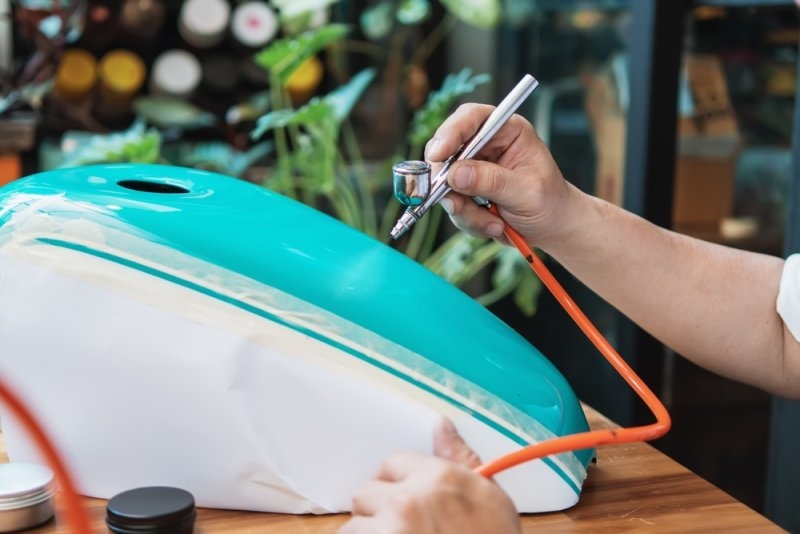
Airbrushing looks easy until you realize your airflow is working against you. Suddenly, paint starts spitting, pressure drops, and those crisp fine lines turn messy. Most of the time, your airbrush isn’t the problem—the compressor is. A good compressor keeps airflow smooth and steady, so your work doesn’t get sabotaged before you even start. It changes everything, whether you’re painting models, cakes, T-shirts, nails, or doing custom art.
In this guide, we’ll look at a few trusted air compressors, break down what you should actually care about before buying, and help you pick the right one for your style and budget. You’ll compare popular models, see which features really count, and find the best fit for how you work.
Not every air compressor for airbrush performs the same. Some prioritize quiet operation. Others focus on portability or continuous airflow. The right choice depends less on price, more on how you paint.
After reviewing performance, user experience, noise levels, airflow consistency, tank design, plus long-term reliability, these five models consistently stand out. The comparison below focuses on practical use rather than marketing claims.
| Model | Best For | Tank | Noise Level | Standout Feature |
| Iwata-Medea IS 800 Smart Jet Pro | Professional artists | No | Very Quiet | Auto shut-off with consistent airflow |
| California Air Tools CAT-1P1060S | Studio users | Yes | Extremely Quiet | Large tank with oil-free operation |
| Badger Aspire TC909 | Hobby painting | Yes | Quiet | Reliable pressure for detailed work |
| Master Airbrush TC-20 | Beginners | Yes | Moderate | Excellent value for everyday projects |
| Silentaire Sil-Air 50-24 | Commercial professionals | Yes | Ultra Quiet | Premium continuous-duty performance |
This comparison keeps things simple. The best air compressor for airbrush is not always the most expensive one. It depends on where, how often, plus what you paint.
Also Read: Types of Airbrushes: A Full Guide for Artists and Hobbyists
A compressor should fit your workflow instead of forcing you to adjust around it. The best air compressor for airbrush for a beginner often differs from what a professional artist needs. Someone painting miniatures on weekends doesn't require the same setup as an illustrator working eight hours a day.
The Master Airbrush TC-20 remains one of the easiest entry points. It includes a storage tank, produces stable pressure, plus costs far less than premium systems. That balance makes it a dependable starting option.
Meanwhile, experienced artists usually prefer the Iwata Smart Jet Pro because airflow stays remarkably steady even during detailed illustration work.
Many buyers focus only on PSI. That's a mistake. A storage tank smooths airflow before it reaches the airbrush. Less pulsing. Better control. Cleaner gradients.
This becomes obvious when painting camouflage on scale models or blending skin tones in portrait illustration. If consistency matters, a tank-equipped air compressor for airbrush is usually worth the extra investment.
Suggested Reading: Best Airbrush Kits Under $100 for Beginners Must Try
Sometimes mobility matters more than raw performance. A portable air compressor for airbrush works well for artists attending workshops, craft fairs, client appointments, or temporary workspaces.
Smaller designs also store easily inside apartments where space is limited.
Large workshop compressors simply don't fit every environment. The Iwata Smart Jet Pro remains popular because it combines compact dimensions with dependable airflow. It feels portable without sacrificing painting quality.
Likewise, the Badger Aspire TC909 offers enough performance for detailed artwork while remaining easy to move between locations. For many hobbyists, that's the sweet spot.
Smaller compressors often generate more heat during extended sessions. If you're painting for thirty minutes at a time, a portable air compressor for airbrush performs extremely well.
Longer commercial sessions, however, benefit from larger tank systems that cycle less frequently. Think about how you actually work—not just where.
Compact equipment has become surprisingly capable. A mini air compressor for airbrush gives new artists an affordable way to practice without dedicating an entire workspace to equipment.
Modern designs are lighter, quieter, plus easier to maintain than older entry-level models. Still, a small size comes with limits.
For nail art, cake decorating, hobby crafts, makeup, or occasional model painting, a mini air compressor for airbrush often provides enough airflow. Continuous automotive work or mural painting is another story.
Small compressors usually struggle during long spraying sessions because duty cycles become shorter. That doesn't make them bad. Just specialized.
Noise changes the painting experience more than expected. California Air Tools CAT-1P1060S has drawn attention for staying remarkably quiet despite delivering impressive airflow.
Artists working from home often value that more than higher PSI numbers. Silence reduces fatigue. It also keeps everyone else in the house happier.
Don't Miss: Are Professional Airbrush Needles Worth The Fine Performance?
Now, a great compressor isn’t magic—it won’t make you a pro overnight. But it gets the equipment out of your way. Airflow stays constant. Paint goes down just how you planned. Suddenly, those tricky details seem a lot less stressful. That’s when you really start to build confidence.
Maybe you want a portable compressor for flexibility, a mini one for the occasional project, or you’re eyeing the best pro setup you can find. Doesn’t matter—what counts is getting consistent, reliable performance every single time you squeeze the trigger.
Most oil-free compressors are pretty low-maintenance. Just keep them clean and make sure to drain water from the tank. Check the hoses, fittings, and filters every few months. Spending five minutes inspecting things helps avoid leaks and keeps your compressor working longer.
Absolutely. Bigger compressors can power several airbrushes at once with a splitter or manifold. Just check that your compressor pumps out enough air for everyone—especially if you’re running longer sessions.
A bit. Higher altitudes drop air density, which means slightly less pressure and airflow. For hobbyists, you’ll barely notice—but if you work on super-detailed projects, you might want to tweak your pressure just a touch.
Start with a tank. Tanks give you smoother airflow, cut down on the motor constantly kicking in, and stop those little pulses that ruin details. Most people find it way easier to learn with a tank, because your spray stays steady and predictable.
This content was created by AI